Fetching financial insights...
•
•
•
•
•
•
The RBI has proposed restricting revolving credit offered by most NBFCs. Learn how flexi loans work, what may change, and what borrowers should check.
Grofi Editorial
Senior Financial Analyst
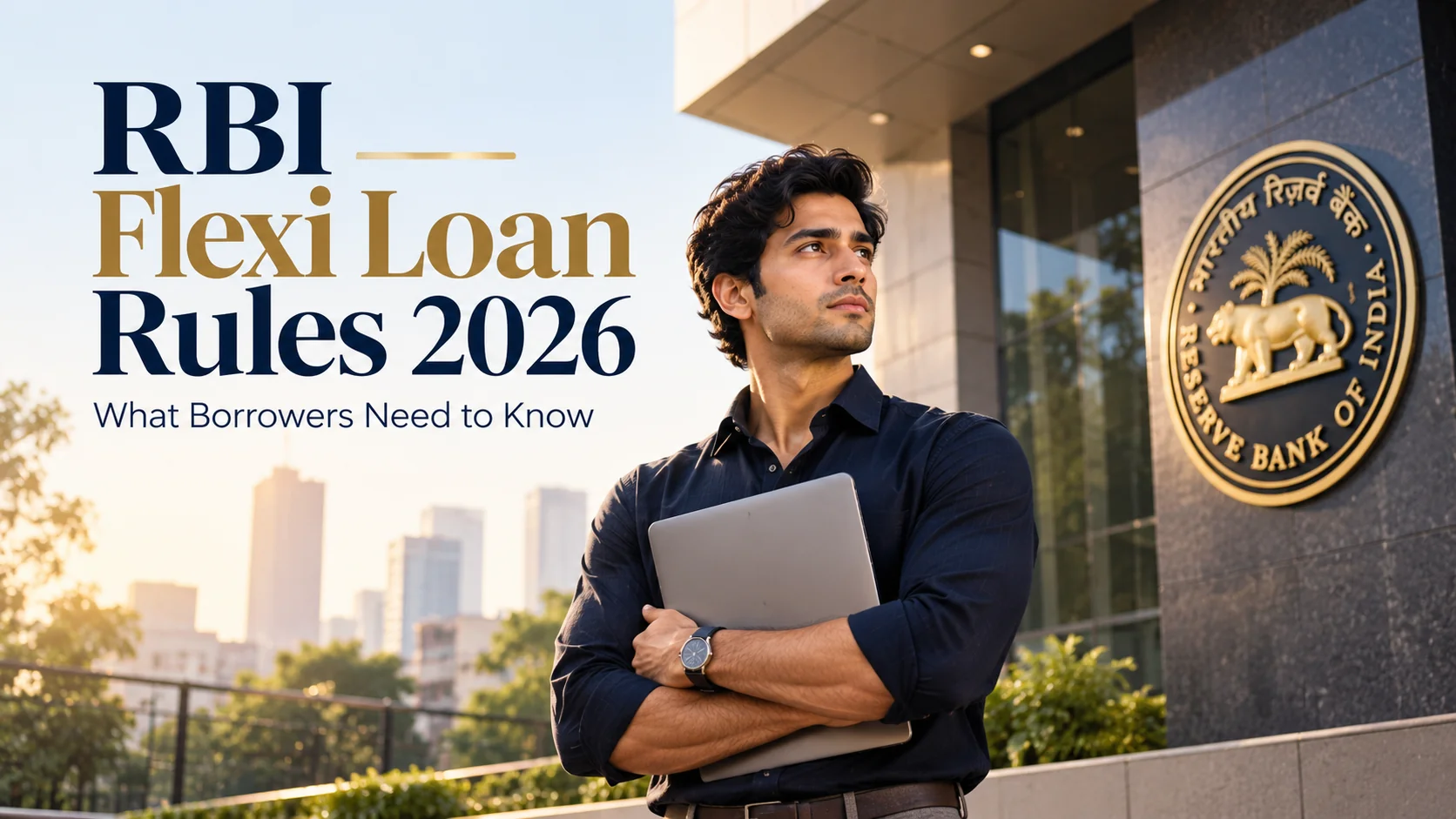
Flexi loans have become a popular borrowing option for people who want access to funds without applying for a new loan every time they need money. Depending on the product, borrowers may be able to withdraw funds within an approved limit, repay the amount used, and access credit again.
However, a proposed regulatory change could affect how certain non-banking financial companies (NBFCs) offer these products in India.
On 6 August 2026, the Reserve Bank of India (RBI) issued draft amendments that would restrict NBFCs from offering revolving-credit facilities, with an exception for NBFCs authorised to issue credit cards. Products such as flexi loans and repeat-draw facilities, which let borrowers access funds multiple times, fall within the scope of this debate. https://www.business-standard.com/finance/news/nbfcs-can-extend-term-loans-not-revolving-credit-products-rbi-draft-norms-126080602028_1.html
Important: The proposal should not be confused with a final regulation. In October, the RBI Governor was reported as saying the central bank was still assessing feedback on the draft. Borrowers should therefore check official announcements and their lender's communications before assuming their existing facility will change. https://economictimes.indiatimes.com/news/economy/policy/rbi-still-assessing-revolving-credit-norms-sanjay-malhotra/articleshow/134765366.cms
In this guide, we explain what the proposal means, how flexi loans differ from term loans, who could be affected, and what borrowers should do next. If you are comparing your options as you read, you can explore personal loan options on Grofi or use the to see what a fixed repayment would cost.

Thinking of a gold loan in India? Learn the RBI's LTV limits, bullet-repayment cap, auction rules and the risks to weigh before pledging jewellery.
Grofi Editorial
Senior Financial Analyst
Swipe table to view more →
The draft, issued on 6 August 2026, proposes that an NBFC should offer only credit products in the nature of term loans and should not offer revolving-credit products. The only exception is for an NBFC authorised by the RBI to issue credit cards. https://rbi.org.in/scripts/bs_viewcontent.aspx?Id=5135
The draft also defines both terms formally for the first time. A "term loan" is a fund-based credit facility of a fixed principal amount, while "revolving credit" is any fund-based credit facility that does not meet the term-loan definition. This is why the proposal can reach products that are not called "revolving credit" in their marketing.
Examples of products that could be affected, depending on their structure and the final rules, include:
Industry bodies have said products with more than ₹2 lakh crore in assets under management could be affected. https://www.outlookbusiness.com/economy-and-policy/nbfcs-seek-rbi-review-of-proposed-curbs-on-revolving-credit
The precise impact will depend on the final regulatory wording, the lender's authorisation, and how each product is structured.
No final ban has been issued. The 6 August document is a draft for comments, not a final direction. On 8 October, the RBI Governor was reported as saying the framework was still under assessment. https://economictimes.indiatimes.com/news/economy/policy/rbi-still-assessing-revolving-credit-norms-sanjay-malhotra/articleshow/134765366.cms
Borrowers should distinguish between three stages:
The proposal is at stage two. Until final directions are confirmed, claims that all NBFC flexi loans have already been banned would be premature. At the same time, the draft's wording is direct, and some lenders are already changing their products in anticipation (see the Bajaj Finance section below).
The draft amends the directions for NBFCs. It does not, on its own, change the rules for banks. NBFCs have argued this could create an uneven playing field, because banks would continue to offer similar working-capital and short-term liquidity products. https://www.outlookbusiness.com/economy-and-policy/nbfcs-seek-rbi-review-of-proposed-curbs-on-revolving-credit If you currently use a bank overdraft or credit line, check with your bank directly, as its terms are governed separately.
A flexi loan is a credit facility that may allow a borrower to access funds within an approved limit rather than receiving and repaying only one fixed disbursement.
The exact features vary by lender and product.
For example, imagine a borrower has an approved flexi-loan limit of ₹3 lakh. The borrower may be able to withdraw ₹50,000 for an expense, repay part of the amount, and draw funds again if the agreement permits it.
This flexibility can be useful when expenses arise at different times. However, the borrower must still pay applicable interest and charges and follow the facility's repayment conditions.
Depending on the product, a flexi loan may offer:
These features are not universal. Always read the lender's agreement to understand how interest, repayments, withdrawals, and charges work.
The central issue in the RBI proposal is the distinction between revolving credit and term loans.
A term loan generally provides a fixed principal amount that the borrower repays according to an agreed schedule. A revolving-credit facility may allow repeated withdrawals and repayments within an approved limit.
Swipe table to view more →
Actual loan terms differ by lender. The legal classification of a product under any final RBI directions will depend on the final definitions, not simply the marketing name used by the lender. Some analysts note that the draft definition appears to allow a term loan to be disbursed in more than one tranche against a fixed sanction, so some "staged" borrowing could still be possible in a term-loan format. This depends on the final wording.
To see how a fixed repayment schedule compares with your current flexi loan, try the Grofi loan EMI calculator with different amounts and tenures.
The draft does not set out a detailed rationale, but reporting points to concerns about borrowers using revolving credit to repay existing dues, which can create a cycle of debt. https://www.deccanchronicle.com/amp/business/indias-nbfc-body-asks-rbi-to-ease-restrictions-on-revolving-credit-1983031 Commentators have also linked the proposal to evergreening, where fresh drawdowns can effectively regularise overdue exposures.
At a practical level, revolving credit lets borrowers access funds repeatedly. While this can help with short-term cash-flow needs, it can also make it easier to accumulate debt without a clear end date. The RBI Governor has also said that technology has blurred the line between term loans and revolving credit, which is one reason the regulator wants clearer definitions. https://www.newsbytesapp.com/news/business/rbi-reviews-nbfcs-revolving-credit-guidelines-sanjay-malhotra-cites-technology/tldr
The proposal also raises practical questions about access to flexible funding, especially for borrowers and small businesses that use repeat-draw credit to manage irregular expenses.
Industry representatives have argued that revolving facilities can be useful for working-capital needs. Reuters reported in August that the Finance Industry Development Council, which represents NBFCs, asked the RBI to reconsider the proposed restrictions, warning of unintended consequences for loans to small and medium businesses and loans against securities. https://www.reuters.com/world/india/indias-nbfc-body-asks-rbi-ease-restrictions-revolving-credit-2026-08-28/
The final framework will determine how these competing concerns are addressed.
The impact will depend on the product you use, the lender providing it, and the final rules.
If you already have a flexi loan from an NBFC, do not assume that your facility has been cancelled or that your repayment terms have automatically changed.
Check your loan agreement and any official communication from the lender. If new directions are issued, the lender should clarify how they apply to existing facilities and any transition arrangements.
Until then, continue meeting your current repayment obligations.
If you are considering a flexi loan, confirm whether the product is currently available, whether the lender's terms have changed, and whether the proposed regulatory framework affects the facility.
Do not choose a product based only on the assumption that you will always be able to withdraw funds repeatedly. You can compare personal loan lenders on Grofi to see current rates, fees, and eligibility side by side.
A revolving facility may be convenient when expenses arrive gradually. If the product you are considering changes or becomes unavailable, a term loan may be an alternative, but it works differently.
With a term loan, you typically receive a specified amount and repay it according to a schedule. Borrowing more later may require a separate application or approval, unless the lender structures the loan to be disbursed in tranches.
Compare the total cost and borrowing conditions before choosing either option.
Some businesses use repeat-draw credit to pay suppliers, buy inventory, or manage gaps between customer payments.
If a particular facility becomes unavailable under final rules, affected businesses may need to evaluate other funding options, such as eligible working-capital facilities (including those from banks) or term loans. Availability and eligibility depend on the lender and the borrower's financial position.
Do not assume that every business loan or overdraft will be treated identically; the final rules and product structure matter.
The draft's exception covers NBFCs that are authorised to issue credit cards, so card-based revolving credit is not the target of this proposal. If you use revolving credit through a card, you can compare credit card options on Grofi, and it is worth checking the interest rate on unpaid balances before relying on a card as a substitute for a flexi loan.
In October 2026, Bajaj Finance's management said on its Q2 FY27 earnings call that the company will launch a set of term-loan variants on 1 November. The variants will not allow withdrawals but are meant to carry other attractive features, as a middle path within the term-loan structure. https://www.investing.com/news/transcripts/earnings-call-transcript-bajaj-finance-lifts-fy27-growth-view-after-strong-q2-93CH-4957743
Analysts estimate that revolving credit accounts for around 15% of Bajaj Finance's assets under management. https://www.indmoney.com/blog/stocks/why-bajaj-finance-share-fell-rbi-proposal Some media reports describe the new term loans as replacing the lender's existing flexi-loan and overdraft models, but borrowers should rely on the lender's own announcements for how existing accounts will be treated. https://www.whalesbook.com/news/English/bankingfinance/Bajaj-Finance-Reshapes-Loan-Strategy-Ahead-of-RBI-Norms/6ad6418379a16deaeaf7238c
This is a lender's reported business response to a proposed regulation. It does not mean the RBI's final rules have been issued or that every NBFC will introduce the same products.
Borrowers considering these new variants should review the official product details when published, including:
Do not assume that a new term-loan variant will have the same features or costs as an existing flexi facility. You can review Bajaj Finance personal loan details on Grofi and compare them with other lenders before deciding.
If you currently have a flexi loan or are planning to apply for one, these practical steps can help you prepare without making decisions based on unconfirmed reports.
Identify whether your facility permits multiple withdrawals, re-borrowing after repayment, or access to an approved credit limit.
The product's contractual features matter more than the label "flexi loan."
Ask whether the lender has issued any formal communication about your particular product.
If the RBI publishes final directions, ask how they apply to your facility and whether any changes to withdrawals, repayment schedules, or other terms are expected.
Do not stop paying EMIs or other amounts due because of news about a draft proposal. Continue following your existing agreement unless your lender formally communicates a change that applies to your account.
If you need new credit, compare term loans, personal loans, and other eligible products.
Look at the total repayment amount, APR where disclosed, fees, tenure, prepayment terms, and the consequences of missing payments. Grofi's personal loan comparison and EMI calculator can help you check the monthly cost before you apply.
Flexible access to credit can make repeated borrowing feel easy. Set a borrowing limit for yourself and make sure the repayment fits your monthly budget.
There is no universal answer. Applying simply because you fear a product might change can lead to unnecessary borrowing.
Before applying, ask yourself:
If you do not need the funds immediately, compare the options calmly instead of rushing into a loan because of a regulatory headline.
The RBI issued draft restrictions on revolving-credit facilities offered by NBFCs on 6 August 2026. Reporting in October indicated that the proposal was still under consideration. Borrowers should verify any final RBI directions before treating the proposal as an effective ban.
Depending on their structure and the final rules, certain flexi loans, repeat-draw facilities, overdraft-style products, and other revolving-credit arrangements offered by covered NBFCs could be affected. The final scope depends on the directions issued by the RBI.
Not automatically on the basis of a draft proposal alone. Check the terms of your loan and any official communication from your lender. The treatment of existing facilities will depend on the final directions and any applicable transition arrangements.
A flexi or revolving-credit facility may allow repeated withdrawals and repayments within an approved limit. A term loan generally provides a fixed principal amount that is repaid over an agreed schedule. Use the Grofi EMI calculator to estimate what a fixed-schedule loan would cost each month.
No. The proposal should not be interpreted as a ban on all personal loans. It targets revolving-credit products offered by covered NBFCs, with an exception for NBFCs authorised to issue credit cards. A standard personal loan with a fixed repayment schedule is a term loan; flexi-style personal loans with repeat withdrawals are the products at issue. You can browse personal loans on Grofi.
The draft includes an exception for NBFCs authorised by the RBI to issue credit cards. The exact application of any final rules should be checked against the final RBI directions. See credit card options on Grofi.
The proposal does not, by itself, establish that interest rates will rise. The cost of a loan depends on the lender, product, borrower profile, and applicable pricing terms. Note that moving from a flexi structure, where you may pay interest only on the amount used, to a fixed-schedule term loan can change your monthly outgo, so compare the actual terms offered to you.
Ask the lender for written details about your existing account, including repayment obligations and any available alternatives. Compare replacement products carefully and do not assume they will have identical withdrawal or repayment features.
The draft amends the NBFC directions and does not itself change the rules for banks. Bank products are governed separately, so check the terms with your bank.
The RBI's proposed restrictions on revolving credit offered by most NBFCs could change how many flexi-loan products are structured. But the proposal is still a draft, and it should not be confused with a final ban on all flexi loans or personal loans.
For borrowers, the most important steps are to understand the terms of their existing facility, monitor official RBI announcements, follow their current repayment obligations, and compare alternatives before taking new credit.
At Grofi, you can compare personal loans, check your EMI, and explore credit cards to make more informed borrowing decisions.
Disclaimer: This article is for educational purposes only and is based on publicly reported information available as of 21 October 2026. The RBI proposal may change before finalisation. This article is not a substitute for official RBI directions, your lender's communications, or personalised financial advice. Confirm the latest regulatory position and product terms before making borrowing decisions.
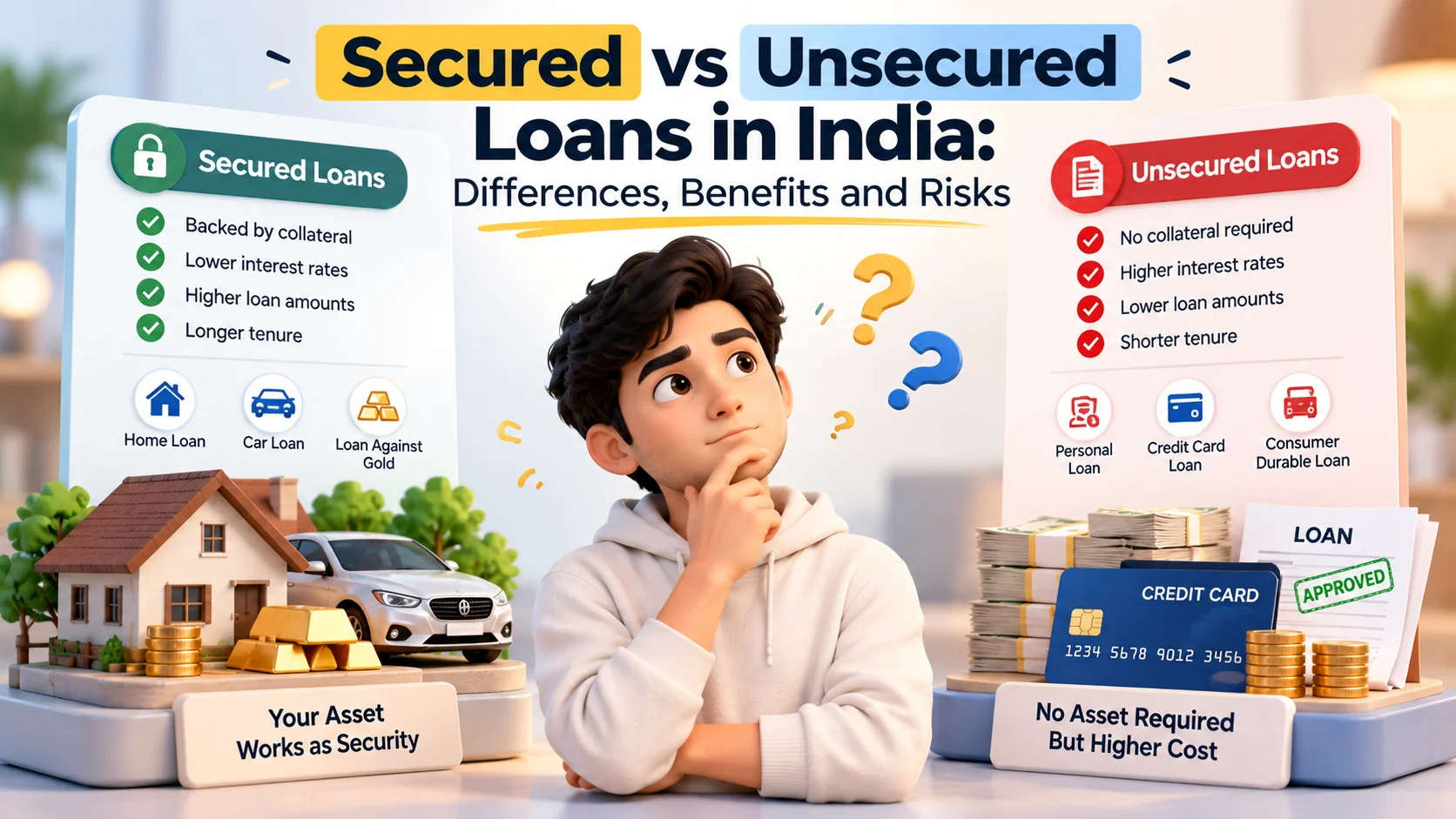
Understand secured vs unsecured loans in India, including collateral requirements, interest rates, eligibility, benefits, risks, and practical examples.
Grofi Editorial
Senior Financial Analyst