How to Improve CIBIL Score: 10 Practical Tips for 2026
Learn how to improve your CIBIL score with 10 practical tips, including timely payments, credit utilisation, credit report checks, and responsible borrowing.
G
Grofi Editorial
Senior Financial Analyst
Editorial Fact-CheckedVerified
Your CIBIL score can play an important role when you apply for a credit card, personal loan, home loan, or other credit facility. A strong credit history can help lenders assess how responsibly you have managed borrowed money in the past.
However, many people are unsure how their credit score works or what they can do to improve it. Some believe that paying off a loan immediately guarantees a higher score, while others think that checking their own score will reduce it.
The reality is that building a healthy credit profile requires consistent financial habits, timely repayments, and regular monitoring of your credit report.
In this guide, we explain how to improve your CIBIL score in India, which financial habits matter most, and what you can do if your score is low.
What Is a CIBIL Score?
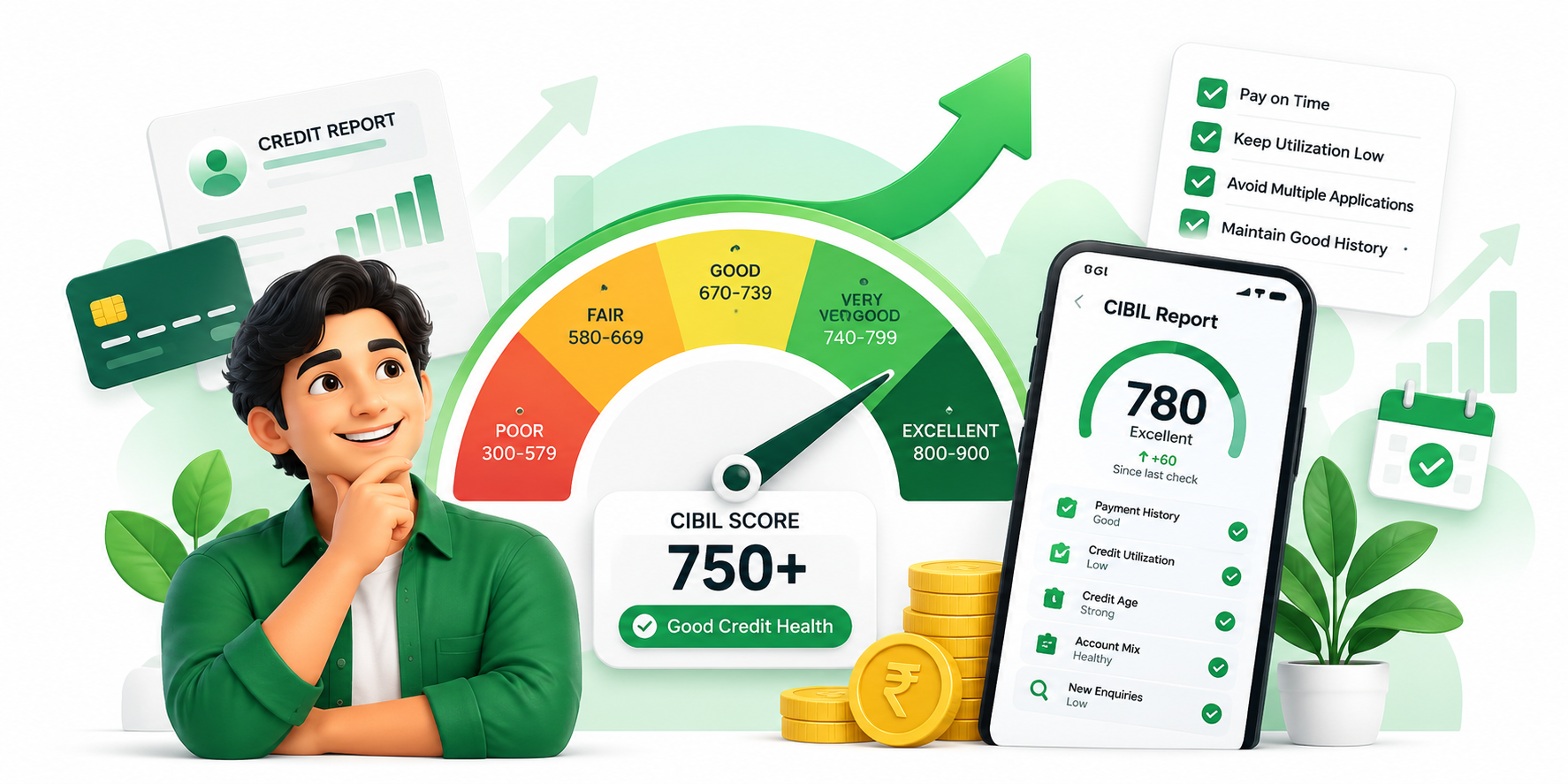
A CIBIL score is a three-digit number ranging from 300 to 900 that summarises your credit history. It is calculated by TransUnion CIBIL using information in your credit report, including your repayment history, credit accounts, outstanding balances, and credit enquiries.
Lenders may use your CIBIL score alongside your income, employment details, existing financial obligations, and other eligibility criteria when evaluating a loan or credit card application.
A higher score generally indicates a stronger credit history, although it does not guarantee loan approval.
What Is Considered a Good CIBIL Score?
CIBIL scores range from 300 to 900. A score closer to 900 generally represents a stronger credit profile.
A score of 750 or above is commonly considered a strong benchmark by many lenders, but there is no universal approval threshold for every financial product.
Your eligibility also depends on the lender's policies, your repayment capacity, and the type of credit you are applying for.
Learn about personal loan eligibility in India, including income, CIBIL score, employment, existing EMIs, required documents, and factors affecting approval.
Improving your credit score is not about finding a shortcut. It is about demonstrating that you can manage credit responsibly over time.
1. Pay Your EMIs and Credit Card Bills on Time
Payment history is one of the important factors affecting your credit score. Missing a credit card payment or loan EMI can negatively affect your credit profile.
To avoid missed payments:
Set reminders a few days before each due date.
Maintain sufficient funds in your repayment account.
Consider setting up an automatic payment instruction.
Review your bank statements and payment confirmations regularly.
For credit cards, paying the full statement balance by the due date is generally preferable to paying only the minimum amount due.
The minimum payment may prevent some immediate consequences of non-payment, but the remaining balance can attract interest and increase your debt burden.
Practical tip: Create a monthly repayment calendar for all your credit cards and loans.
2. Keep Your Credit Utilization Low
Credit utilisation is the percentage of your available revolving credit that you are using.
For example, suppose your credit card has a limit of ₹1,00,000 and your outstanding balance is ₹20,000.
Lower utilisation is generally preferable to consistently using most of your available limit. A commonly used personal-finance guideline is to aim for utilisation below 30%, although this is not a guaranteed scoring threshold.
To manage utilisation, avoid unnecessary purchases on credit, pay balances down regularly, and do not treat your credit limit as additional income.
3. Pay More Than the Minimum Amount Due
Credit card statements generally show a total amount due and a minimum amount due.
Paying only the minimum amount can leave a substantial balance outstanding. Depending on your card's terms, interest may continue to accumulate, making repayment more expensive.
For example, if your statement balance is ₹20,000 and the minimum payment is ₹1,000, paying only ₹1,000 leaves ₹19,000 unpaid before accounting for any interest, fees, or subsequent transactions.
Whenever possible, pay the full statement balance by the due date. If you cannot afford to do so, stop adding unnecessary expenses and make a realistic repayment plan.
Reducing outstanding balances can also help bring your credit utilisation down.
4. Avoid Applying for Too Many Credit Products at Once
When you apply for a credit card or loan, the lender may make a hard enquiry on your credit report.
Several credit applications within a short period can make lenders concerned about increased borrowing needs. Multiple hard enquiries may also affect your score.
Before applying:
Compare products and eligibility requirements.
Check whether the card or loan suits your financial situation.
Avoid submitting applications to many lenders simultaneously.
Apply only when you have a genuine need for credit.
Checking your own credit score is generally a soft enquiry and does not lower your CIBIL score.
5. Maintain a Healthy Credit History
Your credit history reflects how you have managed borrowing over time.
A long history of responsible repayments can help lenders understand your credit behaviour. If you already have an older credit card with reasonable fees and a positive repayment history, consider whether keeping it open makes sense for you.
However, do not keep an expensive card solely to preserve its age if the cost is not justified. Review annual fees, benefits, and your overall financial situation before deciding to close an account.
If you are new to credit, focus on building a consistent record rather than opening multiple accounts just to establish history.
6. Check Your CIBIL Report for Errors
Your credit report contains information about your credit accounts, payment history, outstanding balances, and enquiries.
An incorrect overdue amount, an unfamiliar account, or a payment incorrectly marked as late may affect your credit profile.
Review your report for:
Loans or credit cards you do not recognize.
Incorrect outstanding balances.
Payments incorrectly marked as overdue.
Accounts shown as open after they were closed.
Incorrect personal details.
Unfamiliar credit enquiries.
If you find an error, raise a dispute with TransUnion CIBIL and contact the relevant bank or lender. Keep your payment receipts and account-closure documents as supporting evidence.
Correcting inaccurate information can help ensure that your report reflects your actual credit history. It does not guarantee an immediate score increase.
7. Monitor Your Existing Loans and Outstanding Debts
Your credit profile can be affected by how much you owe and how consistently you repay it.
If you have several loans or credit card balances, prepare a clear list of your outstanding amounts, interest rates, minimum payments, and due dates.
Then:
Prioritise every required payment.
Avoid taking on unnecessary new debt.
Direct additional repayment money towards costly outstanding balances where practical.
Review your budget before committing to another EMI.
Paying down debt can improve your overall financial position and may help your credit profile, depending on the information reported and how your score is calculated.
Do not take a new loan simply to improve your credit score without considering the total cost and repayment obligations.
8. Be Careful When Co-Signing or Guaranteeing a Loan
If you co-sign, guarantee, or jointly hold a loan, you may share responsibility for its repayment.
If the primary borrower misses payments, the resulting reporting may affect your credit profile as well.
Before agreeing to become a guarantor or joint borrower, understand the financial and legal obligations involved.
If you already share a credit obligation with someone, monitor its repayment status regularly. Do not assume that another person's missed payment cannot affect you.
9. Maintain a Sensible Mix of Credit
Credit accounts may include secured loans, such as certain vehicle or home loans, and unsecured credit, such as personal loans and credit cards.
A well-managed credit history across appropriate credit products can provide lenders with information about your repayment behavior. However, taking out additional loans just to create a credit mix is not advisable.
You should never borrow money you do not need simply to improve your score.
Focus first on timely payments, manageable debt, and responsible use of any credit you already have.
10. Monitor Your Credit Score and Give It Time
Credit scores do not necessarily change immediately after you make a payment or reduce a balance.
Lenders report account information periodically, and updates may take time to appear in your credit report. Your score also depends on your overall credit history and other reported information.
Check your report periodically to understand what is helping or hurting your credit profile.
You can obtain your credit report through official credit information company channels. Under RBI requirements, eligible individuals can access one free full credit report, including the score, from each credit information company once per calendar year.
Avoid services promising guaranteed score increases within a few days. There is no universal timeline for improving a credit score.
How Long Does It Take to Improve a CIBIL Score?
The time required to improve a CIBIL score depends on your existing credit history and the reasons for your current score.
For example:
High credit utilization: Reducing balances may help after the updated information is reported, but the effect varies.
Recent missed payments: Consistent repayments can help rebuild your history, although past negative information may continue to affect your profile.
Incorrect credit report information: A successful correction may change your report and score once the update is processed.
-Limited credit history: Building a track record requires time and responsible account management.
Instead of focusing on a fixed number of days, concentrate on the habits that support long-term credit health.
Common Mistakes That Can Hurt Your CIBIL Score
Even financially responsible people can make mistakes that affect their credit profiles.
Avoid these common pitfalls:
Missing payment due dates: Late repayments can be reported and may negatively affect your score.
Using most of your credit limit: Consistently high utilisation can indicate that you are relying heavily on borrowed money.
Applying for unnecessary credit: Too many applications in a short period may create additional enquiries.
Ignoring credit report errors: Unrecognised accounts or incorrect payment records should be investigated promptly.
Borrowing more than you can repay: Multiple EMIs can put pressure on your finances and increase the risk of missed payments.
Believing in guaranteed score-improvement services: No legitimate service can guarantee a particular score increase regardless of your credit history.
Does Checking Your Own CIBIL Score Reduce It?
No. Checking your own CIBIL score through an official self-check service is generally a soft enquiry and does not reduce your score.
Lenders may make hard enquiries when you apply for credit, and these can affect your score depending on your credit profile and the scoring model.
Checking your score periodically is a useful way to monitor your credit health and identify possible errors before applying for a financial product.
Can You Get a Loan With a Low CIBIL Score?
It may be possible, but approval is not guaranteed.
Different lenders have different eligibility requirements. They may consider your income, employment stability, repayment capacity, existing obligations, credit history, and the loan amount you request.
A low score may reduce your options or result in less favourable terms. Before applying, review your credit report, correct any errors, reduce outstanding debt where possible, and make all repayments on time.
Avoid submitting numerous applications in the hope that one lender will approve you.
Frequently Asked Questions
1. What is a good CIBIL score in India?
A score of 750 or above is commonly considered a strong benchmark by many lenders. However, approval criteria differ between lenders and products, and a high score does not guarantee approval.
2. How can I improve my CIBIL score quickly?
Start by paying overdue amounts where possible, maintaining timely repayments, reducing high credit utilisation, and correcting errors in your credit report. The time required for improvement depends on your individual circumstances and reporting updates.
3. Does paying off a loan increase my CIBIL score?
Repaying a loan as agreed can support a healthy credit history. However, closing a loan does not guarantee an immediate increase because the effect depends on your complete credit profile and the information reported.
4. Does closing a credit card reduce your CIBIL score?
Closing a card may affect your overall available credit, utilisation, and credit history. The effect varies by individual. Consider fees, spending habits, and the consequences for your credit profile before closing an account.
5. Can I improve my CIBIL score without a credit card?
Yes. Responsible repayment of other reported credit facilities can help establish a credit history. You do not need to take out a credit card solely to improve your score.
6. How often should I check my CIBIL score?
Checking it periodically, such as every few months or before an important credit application, can help you monitor changes and spot errors. Checking your own score through an official self-check service does not normally reduce it.
7. Can a CIBIL score of 900 be guaranteed?
No. Your score depends on your credit history and the scoring model. No lender or credit repair service can legitimately guarantee that you will reach a specific score.
Final Thoughts
Improving your CIBIL score is a gradual process built on responsible financial habits. Paying your bills on time, keeping credit utilisation manageable, limiting unnecessary credit applications, and checking your credit report can help you develop a healthier credit profile.
Remember that a strong score is not only about getting approved for loans or credit cards. It is also about managing borrowing in a way that supports your long-term financial stability.
Before applying for a financial product, compare eligibility criteria, fees, interest rates, and repayment obligations carefully.
Explore Grofi to learn more about credit cards, personal loans, and other financial products so you can make informed decisions based on your needs and repayment capacity.
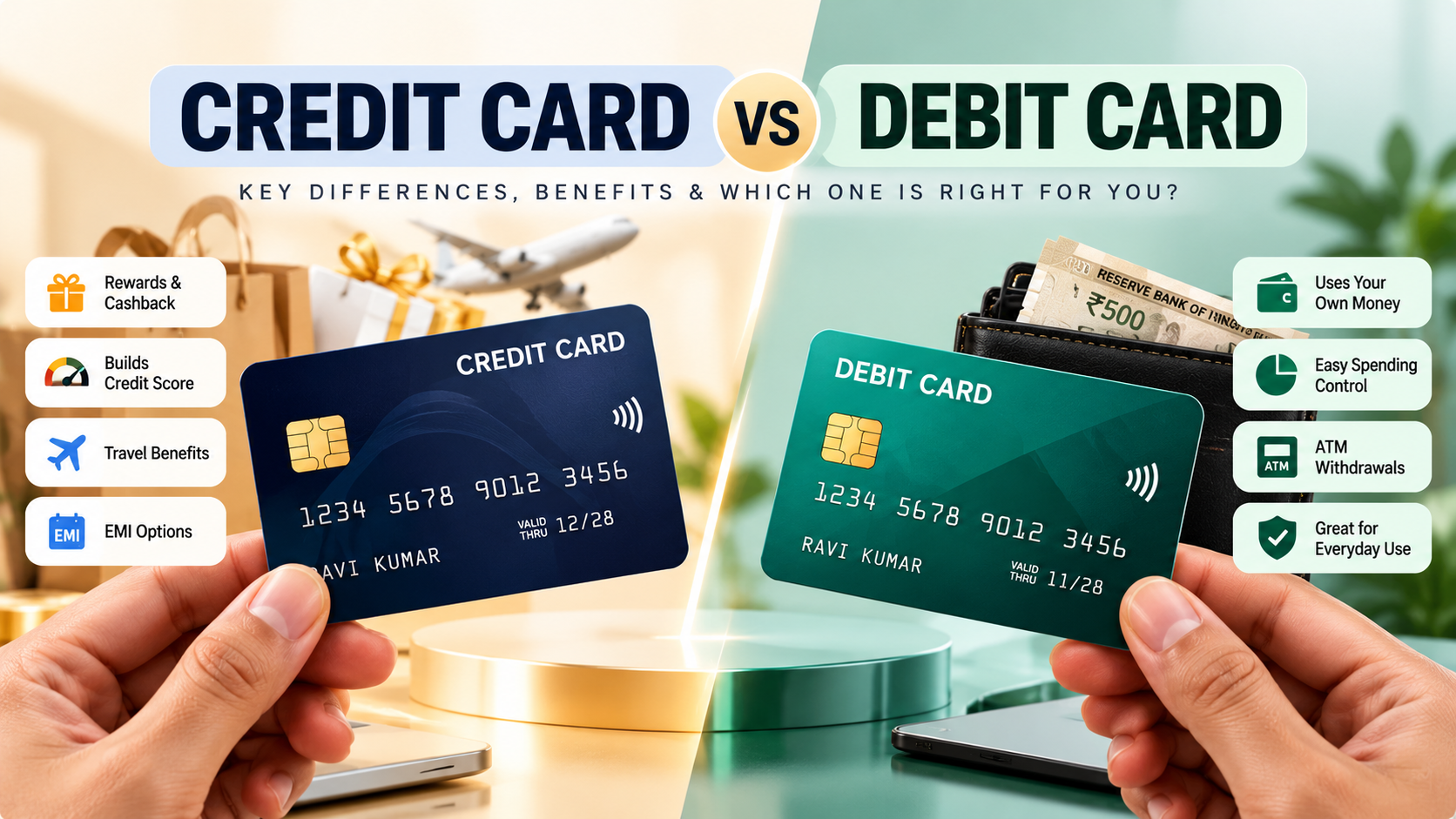
Learn the difference between credit cards and debit cards, including how they work, fees, rewards, credit scores, benefits, and which card is right for you.