Credit Card vs Debit Card: Key Differences Explained (2026)
Learn the difference between credit cards and debit cards, including how they work, fees, rewards, credit scores, benefits, and which card is right for you.
G
Grofi Editorial
Senior Financial Analyst
Editorial Fact-CheckedVerified
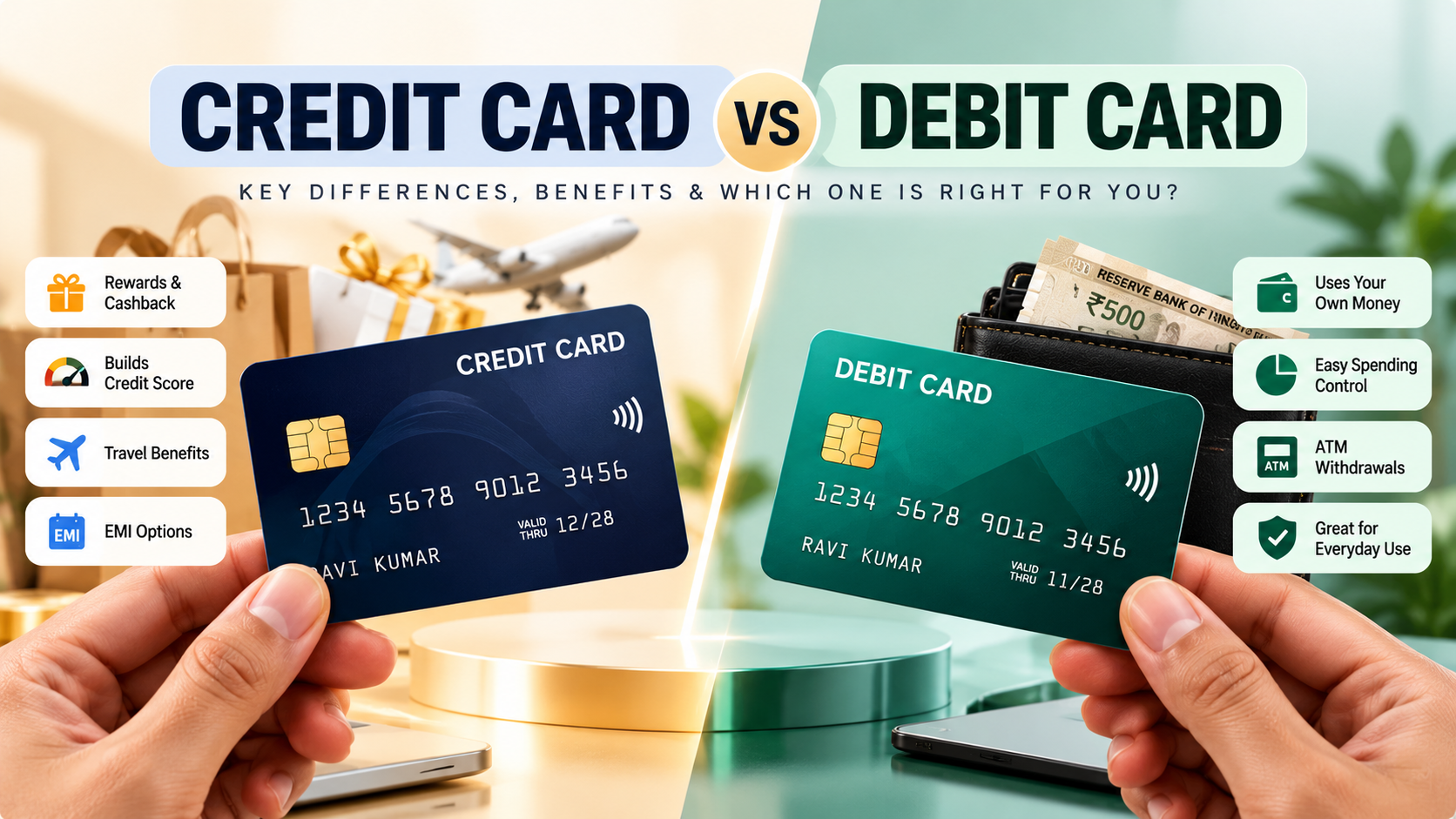
When making payments online, shopping at stores, booking flights, or paying bills, you have probably used a credit card or a debit card. Although both cards can look similar and work at the same payment terminals, they function differently.
The biggest difference between a credit card and a debit card is where the money comes from. A debit card generally uses money available in your bank account, while a credit card allows you to borrow money from a card issuer up to an approved credit limit.
Understanding the difference can help you manage your spending, avoid unnecessary charges, build a credit history, and choose the right card for your financial needs.
In this guide, we will explain how credit cards and debit cards work, compare their advantages and disadvantages, and help you decide which one is more suitable for everyday use in India.
What Is a Credit Card?
A credit card is a payment card issued by a bank or another eligible card issuer that allows you to make purchases using an approved credit limit.
Instead of deducting the purchase amount directly from your bank account, the card issuer pays the merchant on your behalf. You then repay the amount according to your billing cycle and payment due date.
For example, suppose your credit card has a limit of ₹50,000. You purchase a smartphone worth ₹15,000 using the card. Your available credit limit generally reduces to ₹35,000, subject to any other transactions or holds.
You must repay the outstanding amount by the due date. If you pay the entire statement balance on time, eligible purchases typically do not attract interest during the interest-free period. However, cash advances, certain transactions, fees, and unpaid balances may be treated differently.
Key features of a credit card
Spend within the credit limit approved by the issuer.
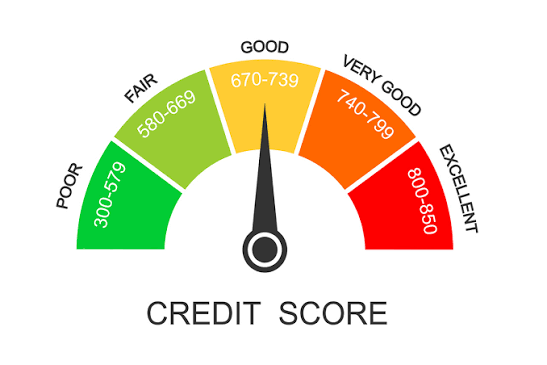
Learn what a credit score is, how it is calculated, why it matters, what counts as a good score in India, and practical ways to improve your credit profile.
Credit history: Responsible use and repayment can help build your credit profile.
Rewards and cashback: Eligible cards may offer rewards, cashback, discounts, or travel benefits.
Monthly billing: Transactions are consolidated into a statement.
Potential interest and fees: Interest, late-payment charges, annual fees, and other charges may apply according to the card terms.
What Is a Debit Card?
A debit card is a payment card linked to your savings or current bank account. When you use it to make a purchase, the amount is generally deducted from your available account balance.
For example, suppose your bank account contains ₹20,000. If you use your debit card to purchase groceries worth ₹2,000, your available balance will generally reduce to ₹18,000.
A debit card does not normally provide a borrowing facility. However, certain accounts or banking arrangements may allow overdrafts, subject to separate terms and eligibility.
Key features of a debit card
Direct bank-account access: Payments generally use your available account balance.
Spending control: You are usually limited to the money available in your account.
ATM access: You can withdraw cash, subject to applicable limits and charges.
Online and offline payments: Debit cards can be used at supported merchants and payment terminals.
No conventional credit-building facility: Debit-card spending alone generally does not build a credit history.
Credit Card vs Debit Card: Key Differences
Here is a side-by-side comparison of the two payment methods.
Feature
Credit Card
Debit Card
Source of money
Credit provided by the issuer
Money in your linked bank account
Spending limit
Approved credit limit
Available account balance and card limits
Repayment
Pay the monthly statement
Money is generally deducted automatically
Interest
May apply if the balance is not paid according to the terms
No conventional borrowing interest on ordinary purchases
Credit score
Responsible use may help build credit history
Ordinary use generally does not build credit history
Rewards
Often offers rewards, cashback, or other benefits
Benefits vary by bank and card
ATM withdrawals
Cash advances can attract fees and interest
Withdrawals use account funds and may incur fees
Overspending risk
Higher if you borrow beyond your repayment capacity
Generally easier to limit to available funds
Annual fees
Depends on the card
Depends on the card and account terms
Fraud protection
Depends on applicable rules, issuer terms, and transaction type
Depends on applicable rules, issuer terms, and transaction type
The exact benefits, fees, protections, and transaction limits depend on your bank, card network, issuer, and applicable regulations.
How Does a Credit Card Work?
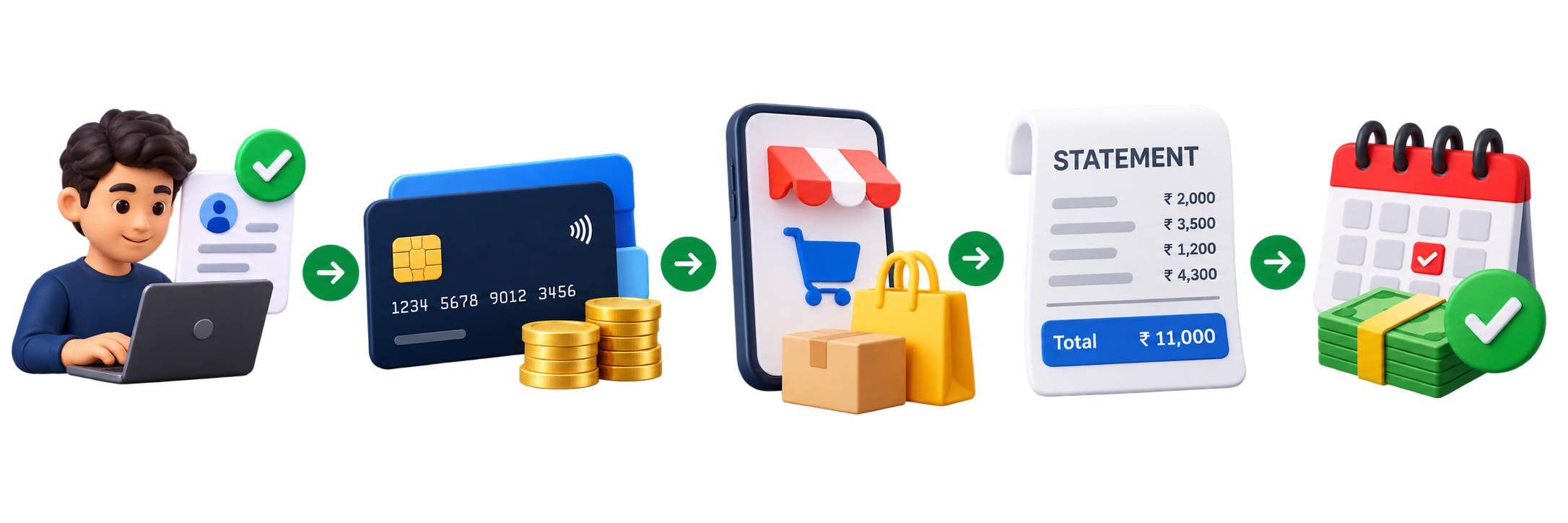
A credit card allows you to make purchases now and repay the issuer later.
How a credit card works illustration showing the five steps: applying for a credit card, receiving a credit limit, making purchases, receiving a monthly statement, and repaying the bill by the due date.
The process generally works as follows:
Apply for a card: The issuer evaluates your application and eligibility.
Receive a credit limit: If approved, you receive a spending limit.
Make purchases: Eligible transactions use part of your available limit.
Receive your statement: The issuer lists your transactions and outstanding amount.
Repay your bill: Pay the total statement balance by the due date to avoid interest on eligible purchases under the applicable terms.
Example of a credit card bill
Imagine that you make the following purchases during a billing cycle:
Groceries: ₹3,000
Online shopping: ₹4,000
Fuel: ₹2,000
Your total purchases equal ₹9,000.
If your statement balance is ₹9,000, paying the full amount by the due date generally helps you avoid interest on eligible purchases, provided the card's interest-free conditions are satisfied and no other charges apply.
Paying only the minimum amount due does not mean your bill has been fully repaid. The remaining balance may attract interest, and new purchases may lose their interest-free benefit under the card's terms.
How Does a Debit Card Work?
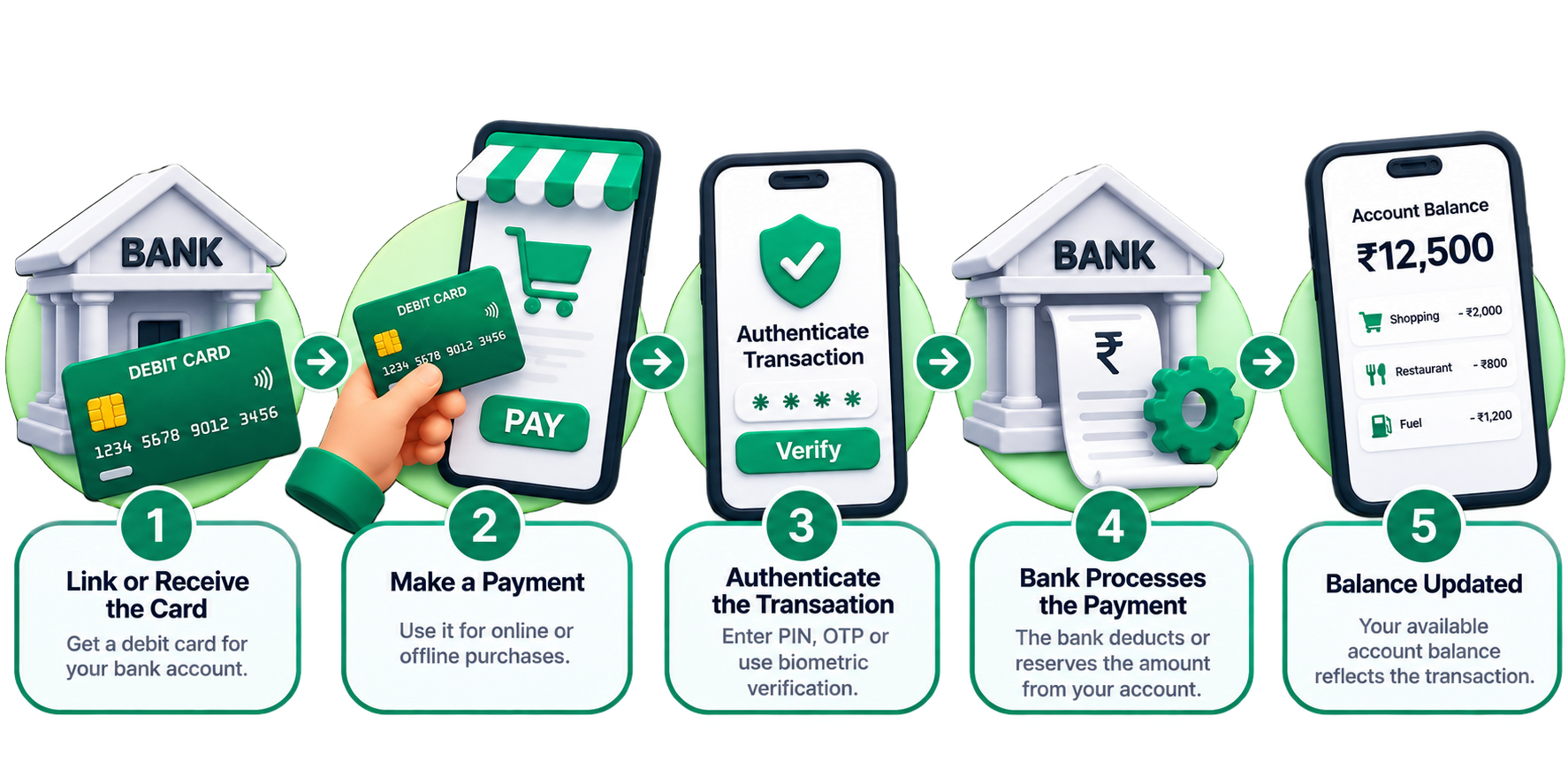
A debit card uses money available in your linked bank account for supported transactions.
How a debit card works illustration showing bank account linking, payment authorization, transaction processing, and updated accoun
The process generally works as follows:
Link or receive the card for your bank account.
Use it for an eligible online or offline payment.
Authenticate the transaction when required.
The bank processes the transaction and deducts or reserves the amount as applicable.
Your available account balance reflects the transaction.
For example, if your account has ₹10,000 and you spend ₹1,500 using your debit card, the remaining available balance will generally be ₹8,500, assuming there are no other transactions, holds, or charges.
Because you are normally using your own money, a debit card can be helpful for everyday purchases and managing a fixed spending budget.
Advantages of Credit Cards
1. Build a credit history
Using a credit card responsibly and paying on time can help establish a credit history. Your payment behaviour, credit utilisation, and other factors may influence your credit score.
2. Earn rewards and cashback
Some credit cards provide cashback, reward points, travel benefits, dining discounts, or shopping offers. Choose a card based on your actual spending rather than rewards alone.
3. Manage short-term expenses
A credit card can help manage the timing of eligible expenses between your purchase date and payment due date, provided you have a reliable repayment plan.
4. Access additional benefits
Depending on the card, you may receive purchase protections, travel-related benefits, or other features. Always check the terms and exclusions.
5. Access eligible EMI options
Certain purchases may qualify for EMI conversion. Before choosing an EMI plan, check the interest rate, processing fee, taxes, and total amount payable.
Disadvantages of Credit Cards
1. Interest can become expensive
Carrying an unpaid balance can lead to substantial interest charges. Credit card interest rates can be high, so paying the full statement balance is generally preferable.
2. Overspending is possible
An available credit limit is not additional income. Spending more than you can repay may lead to debt.
3. Fees may apply
Some cards charge annual or joining fees, late-payment charges, cash-advance fees, foreign-currency markup, or other transaction-specific charges.
4. Missed payments can affect your credit profile
Late or missed payments may negatively affect your credit history and credit score.
Advantages of Debit Cards
1. Easier spending control
Payments generally come directly from your bank account, making it easier to stay within your available funds.
2. No conventional credit-card bill
You usually do not have a separate monthly borrowing balance to repay for ordinary debit-card purchases.
Convenient cash withdrawals**
Debit cards can provide access to ATMs, subject to your account's withdrawal limits and applicable charges.
4. Suitable for everyday expenses
A debit card is useful for groceries, transport, shopping, bill payments, and other purchases when you want to use your existing funds.
Disadvantages of Debit Cards
1. Limited to available funds
If your account balance is insufficient, a transaction may be declined unless an overdraft or another facility is available.
2. Fewer credit-building opportunities
Ordinary debit-card transactions generally do not establish a borrowing and repayment history.
3. Rewards may be limited
Some debit cards offer cashback and discounts, but the benefits can differ from those offered by credit cards.
4. Fraud can affect your account balance
An unauthorised transaction may temporarily reduce the funds available in your account. Report suspicious activity immediately and follow your bank's dispute process.
Credit Card vs Debit Card: Which Is Better for Online Shopping?
Both cards can be used for online shopping, depending on merchant acceptance and the card's features.
A credit card may be useful when you want to earn eligible rewards, access purchase-related benefits, or manage payment timing. However, it is important to pay the bill in full and avoid purchases you cannot afford.
A debit card may be preferable when you want to spend directly from your bank balance without taking on conventional credit-card debt.
For either card, use trusted websites, never share your PIN or OTP, and enable transaction alerts.
Which Card Is Better for Building a Credit Score?
A credit card can help you establish a credit history when you use it responsibly and the issuer reports the account to the relevant credit information companies.
To maintain healthy credit habits:
Pay your credit card bills on time.
Aim to pay the full statement balance.
Keep your credit utilisation at a reasonable level.
Avoid applying for unnecessary credit.
Check your credit report periodically for errors.
Using a debit card alone generally does not build a credit history because ordinary debit-card purchases do not involve borrowing and repayment.
Remember that a credit card does not guarantee a higher credit score. Your overall credit profile, repayment history, outstanding debt, and other factors matter.
Can You Have Both a Credit Card and a Debit Card?
Yes. You can use both cards for different purposes.
For example, you might use a debit card for everyday purchases that you want to deduct directly from your bank account. You could use a credit card for selected purchases where the rewards or other benefits justify using it, provided you can repay the bill in full.
A simple approach is to:
Use your debit card when you want to spend within your available bank balance.
Use your credit card for planned expenses you can repay.
Track spending on both cards.
Never treat your credit limit as extra income.
Review fees, statements, and transaction alerts regularly.
Safety Tips for Credit and Debit Card Users
Regardless of which card you use, follow these precautions:
Never share your card PIN, CVV, passwords, or OTP with anyone.
Enable SMS or app alerts for transactions.
Set appropriate transaction limits where your bank provides the option.
Avoid entering card details on suspicious websites.
Report a lost card or unauthorised transaction to your bank immediately.
Review your statements and account transactions regularly.
Use official bank channels to block a card or raise a dispute.
In India, report suspected financial cyber fraud promptly through your bank and the official cybercrime helpline at 1930 where applicable.
Frequently Asked Questions
1. Is a credit card better than a debit card?
Neither is universally better. A credit card may offer rewards and help build credit history, but it requires careful repayment. A debit card is generally useful for spending money already available in your account.
2. Does a debit card affect your CIBIL score?
Ordinary debit-card purchases generally do not affect your CIBIL score because they do not involve conventional credit. Other credit facilities associated with a bank account, if any, may be treated differently.
3. Can I withdraw cash using a credit card?
Yes, if your card permits cash advances. However, cash advances can attract fees and interest, often from the transaction date. Check the card's terms before withdrawing cash.
4. Can I use a credit card without paying interest?
You can generally avoid interest on eligible purchases by paying the full statement balance by the due date and meeting the issuer's interest-free-period conditions. Cash advances and other transactions may have different rules.
5. Which card is safer: credit or debit?
Both can have security features and regulatory protections. The outcome of a disputed transaction depends on the circumstances, reporting time, applicable regulations, and issuer procedures. Neither card should be treated as completely risk-free.
6. Can I use my debit card for international payments?
Some debit cards support international transactions, while others may require international usage to be enabled. Check your bank's rules, transaction limits, currency-conversion charges, and applicable fees.
7. Does having a credit card mean I can spend more money?
A credit card provides access to credit, not extra income. Spend only what you can comfortably repay and account for existing financial commitments.
8. How do I choose the right credit card?
Compare eligibility, annual fees, interest rates, reward structures, spending categories, exclusions, and repayment terms. Select a card based on your needs and ability to repay rather than promotional claims alone.
Final Thoughts
The main difference between a credit card and a debit card is the source of money. A debit card generally uses your existing bank balance, while a credit card provides access to borrowed funds that you must repay.
If you prefer straightforward spending control, a debit card may suit your everyday needs. If you want rewards and the opportunity to build a credit history, a credit card may be worth considering, provided you manage it responsibly.
Before applying for a credit card, compare its fees, benefits, eligibility criteria, and repayment terms carefully.
Explore Our site to learn about credit cards, compare available financial products, and make more informed decisions about your finances. Product availability and approval depend on the relevant issuer's criteria.
Learn what a personal loan is, how it works, how EMIs and interest are calculated, eligibility requirements, fees, benefits, risks, and tips for choosing the right loan.